Finding an ovarian cyst on an ultrasound can immediately raise questions about surgery, fertility, and whether the cyst could be dangerous. Yet ovarian cysts are not all the same, and many do not require an operation.
The appropriate approach to ovarian cyst treatment in Pune depends on several factors, particularly the patient's age, symptoms, ultrasound appearance, cyst size, and whether she has reached menopause.
What Is an Ovarian Cyst?
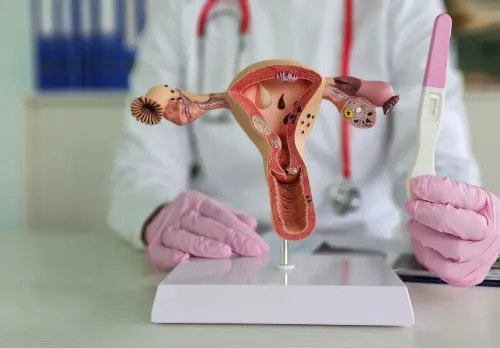
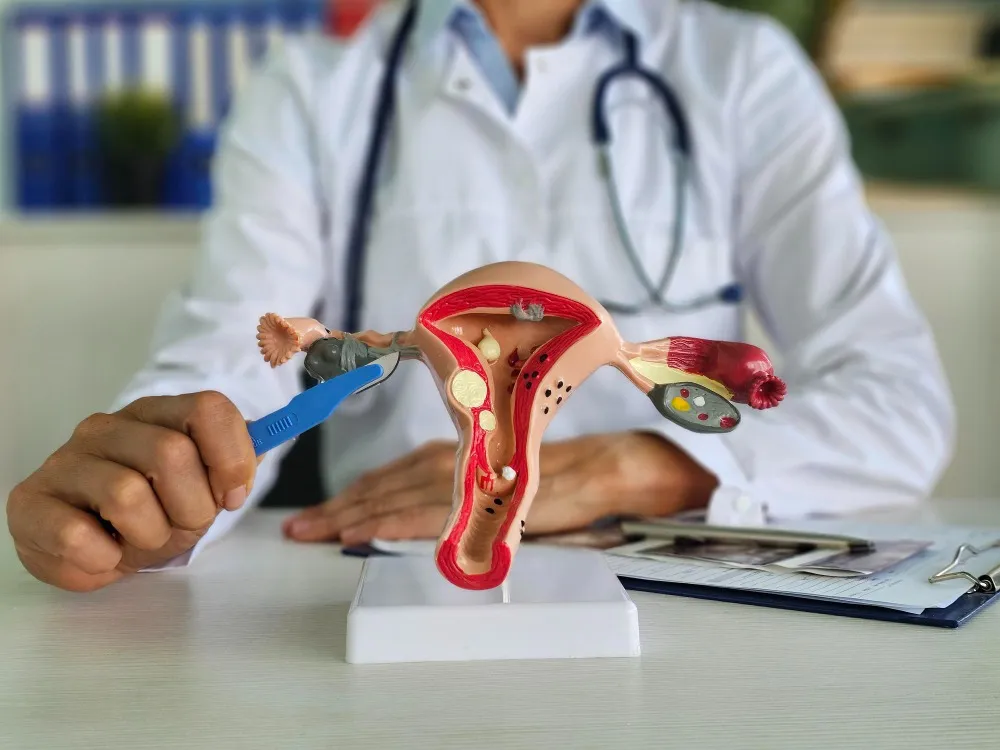
An ovarian cyst is a fluid-filled or partly solid structure involving an ovary.
Some cysts develop as part of normal ovarian function and may disappear naturally. Others arise from conditions such as endometriosis or from different types of ovarian growths.
This is why the word 'cyst' alone tells only part of the story.
Functional Cysts
During the reproductive years, ovaries normally undergo changes as part of the menstrual cycle. Functional cysts can develop during these processes.
Many uncomplicated functional cysts resolve without surgical treatment.
A doctor may therefore recommend observation and, where appropriate, repeat imaging rather than immediate intervention.
When Does a Cyst Need Closer Evaluation?
Several factors influence the next step.
A gynecologist will generally consider:
- Patient age
- Menopausal status
- Cyst size
- Simple or complex appearance
- Persistent or increasing size
- Pelvic pain
- Menstrual symptoms
- Fertility plans
- Previous ovarian problems
- Relevant family and medical history
Ultrasound characteristics are particularly useful because they provide considerably more information than size alone.
Symptoms Should Not Be Ignored
Some ovarian cysts cause no symptoms and are found incidentally during imaging performed for another reason.
Others can cause pelvic discomfort, pressure, bloating, pain during intercourse, or menstrual changes.
Sudden severe pelvic pain, particularly when accompanied by nausea, vomiting, faintness, or significant weakness, requires prompt medical assessment because acute complications such as torsion or cyst rupture may need urgent attention.
Monitoring Compared With Surgery
Observation can be appropriate when the cyst has reassuring characteristics and the patient's overall clinical situation supports monitoring.
Follow-up imaging may be used to determine whether it has disappeared, remained stable, or changed.
Surgery may be considered when a cyst is persistent, symptomatic, unusually large, has concerning characteristics, causes complications, or cannot be adequately assessed through observation alone.
The decision is therefore based on a combination of findings rather than a fixed size applicable to every woman.
Can Ovarian Cysts Affect Fertility?
Some ovarian cysts have little or no effect on fertility. Others may be associated with conditions that influence reproductive health.
Endometriomas, for example, are associated with endometriosis. Treatment decisions become particularly important when fertility preservation is a priority.
Removing an ovarian cyst while preserving healthy ovarian tissue may be considered when clinically appropriate. However, surgery itself also requires careful planning because ovarian reserve can be relevant, especially for women who want future pregnancies.
Where Does Minimally Invasive Surgery Fit In?
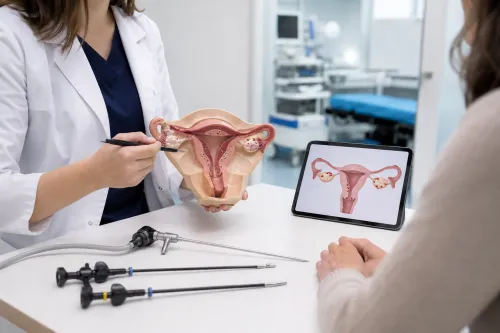
When surgery is necessary, some ovarian cyst procedures can be performed laparoscopically.
Laparoscopic surgery uses small abdominal incisions and specialized instruments rather than the larger incision associated with conventional open surgery.
Whether it is suitable depends on the cyst, surgical complexity, clinical findings, and patient-specific considerations.
For women in Pune and elsewhere in Maharashtra, discussing these factors before surgery can help clarify whether observation, further investigation, or an operation is appropriate.
Dr Kunaal Shinde, Best Gynecologist evaluates ovarian cysts within the broader context of menstrual health, symptoms, reproductive plans, imaging findings, and surgical considerations.
An ultrasound report that says 'ovarian cyst' should therefore be viewed as the beginning of an assessment rather than the final diagnosis or treatment plan. Understanding what type of cyst is present and how it is behaving is what guides sensible management.
Keywords