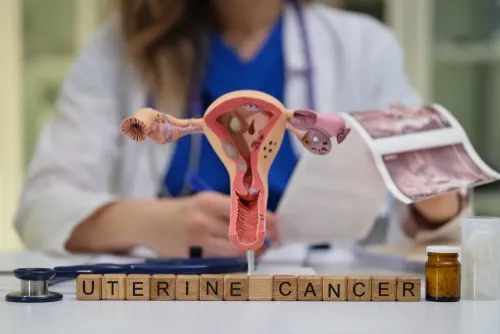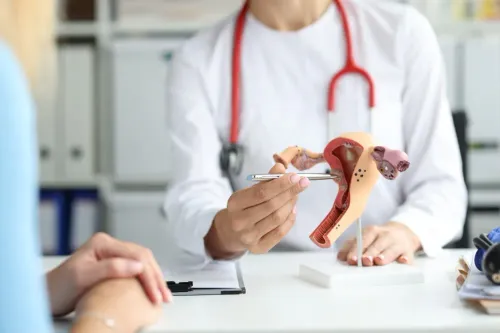
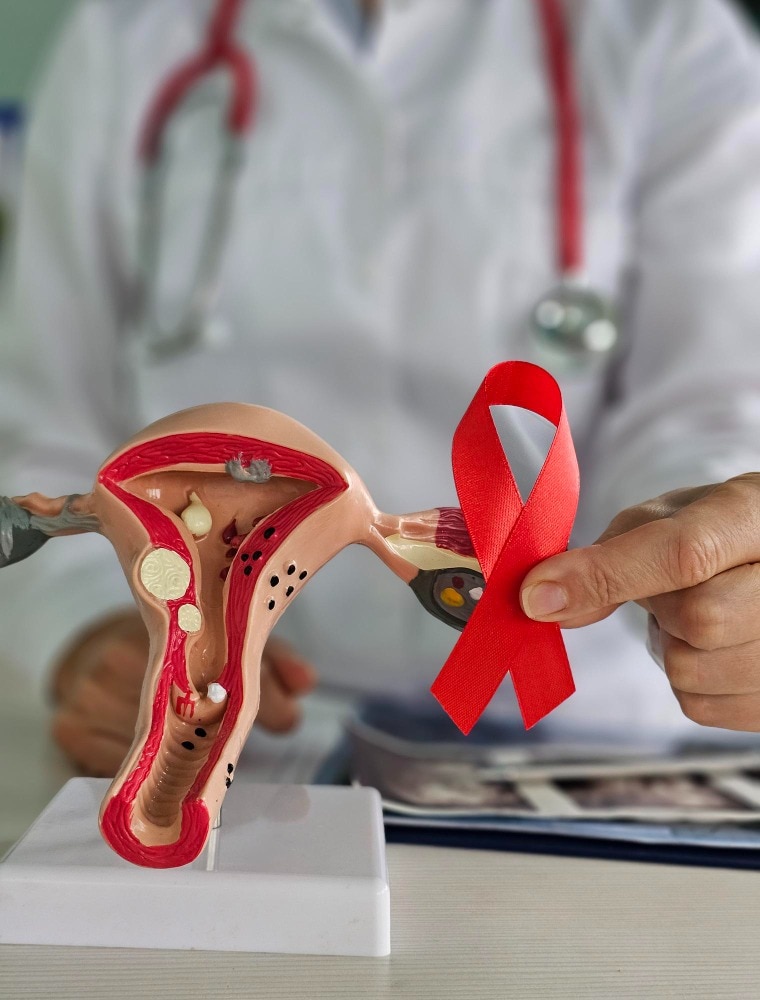
A vulvar lump, sore, colour change, itching, burning or bleeding does not prove cancer, but a symptom that persists, returns or changes needs a clinical examination rather than repeated self-treatment. You will learn when to seek prompt or same-day care, which specialist is appropriate, how biopsy and consultation work, and how to compare care options across western Pune.
Key takeaways
- Book prompt assessment for a persistent lump, ulcer, sore, growth, colour change or unexplained bleeding.
- Choose a gynecologist for initial assessment and a cancer specialist for suspicious or confirmed findings.
- Ask how biopsy results, staging, treatment options and follow-up will be coordinated.
- Compare Western Pune clinics by specialist expertise, biopsy access, hospital support and travel time.
Which Vulvar Symptoms Need a Specialist Appointment?
Anyone with a persistent vulvar lump, ulcer, wart-like growth, thickened skin, colour change, unexplained bleeding or discharge, ongoing itching, burning or pain, or a sore that does not heal should arrange prompt assessment. Anyone asking who should see vulvar cancer specialist in aundh in pune should use these symptoms as the guide, not pain severity.
A lesion can be painless, small, hidden between skin folds, or resemble a hair follicle. Do not assume it is piles, thrush, an ingrown hair or a fungal infection. If repeated treatment for infection, dermatitis or allergy has not helped, request reassessment rather than continuing self-treatment.
- Arrange prompt review if you are older, have lichen sclerosus, vulvar intraepithelial neoplasia (VIN), HPV, a smoking history, immune suppression, or previous cervical, vaginal or anal cancer.
- Seek same-day care for heavy bleeding, rapidly increasing swelling, severe pain, fever, or difficulty passing urine.
Lichen sclerosus, eczema, cysts, warts and infections can look like cancer, so symptoms cannot confirm the diagnosis. There is no routine vulvar cancer screening test comparable to cervical screening; a new change needs examination.
| Symptom pattern | What to do |
|---|---|
| Short-lived symptom with a confirmed benign cause | Follow the treatment plan; an oncology visit may not be needed |
| Persistent, recurrent or unexplained change | Arrange examination and reassessment |
| Heavy bleeding, fever or urinary blockage | Seek same-day medical care |
When Is a Gynecologist, Dermatologist or Cancer Specialist the Right Choice?
A gynecologist or dermatologist is the right first stop for a new vulvar rash, cyst, infection, wart or other skin disorder. Ask for referral to a gynecologic oncologist when the lesion is unexplained, recurrent, progressive, resistant to treatment or clinically suspicious; this is when searching for a vulvar cancer doctor near Baner is reasonable.
Biopsy is the diagnostic test because appearance cannot prove cancer. The clinician selects the most representative area, cleans the skin, injects local anaesthetic, removes a small sample and gives wound-care instructions. Do not cut, burn or repeatedly apply treatment to a lesion before diagnosis; altered tissue can complicate pathology assessment.
1. Arrange gynecologic-oncology review after an abnormal biopsy, a referral from another clinician, or a report mentioning VIN, differentiated VIN, invasive squamous-cell carcinoma, melanoma or Paget disease. VIN is pre-invasive, but differentiated or recurrent disease deserves specialist review.
2. Request a second pathology opinion for VIN, unusual histology, close or positive margins, or a report that conflicts with the examination. Bring the original report and, when available, the slides or tissue blocks.
3. Treat consultation as clarification, not a cancer confirmation or commitment to surgery. The specialist may recommend surveillance, another biopsy or treatment after reviewing the examination and pathology.
What Happens at a Vulvar Cancer Consultation?
A vulvar cancer consultation Pashan begins with a symptom timeline: when the change started, how it progressed, and what treatments you have tried. The clinician reviews previous diagnoses and medicines, inspects the vulva, examines the groin lymph nodes, and uses vulvoscopy when magnification helps define an abnormal area.
If a biopsy exists, request review of the original report; the specialist may also request the slides or tissue blocks for specialist pathology review.
Bring these records:
- Original pathology report, slides or tissue blocks, if available
- Scan reports and imaging discs
- Operative and radiation records
- Current medicines, doses and allergies
- Dates of symptoms
- Previous cervical screening and vulvar procedure records
Bring photographs only when a clinician requested them. Depending on the examination and pathology, the team may arrange a biopsy, examination under anaesthesia, ultrasound, MRI, CT or PET-CT. Diagnosis often takes separate biopsy, pathology-review, imaging and results visits before treatment planning.
| Report detail | What it tells you | Why it matters |
|---|---|---|
| Invasive or pre-invasive | Whether cancer has entered deeper tissue | Determines staging and treatment |
| Histologic type | The tumour’s cell pattern | Guides specialist planning |
| Depth of invasion | How far invasive disease extends | Affects groin-node assessment |
| Margin status | Whether abnormal cells reach the removed edge | Indicates whether further treatment needs discussion |
| Lymphovascular invasion | Whether tumour is present in vessels | Helps assess spread risk |
| HPV-related or differentiated VIN | The pathway linked to the lesion | Influences interpretation and follow-up |
How Should You Compare Specialists and Locations in Western Pune?
Choose clinical capability and reliable access, not the neighbourhood name alone. Whether you search for a vulvar cancer specialist Balewadi, a vulvar cancer doctor near Baner, or a consultation in Pashan or Aundh, compare these points:
| Area to compare | What to verify | Why it matters |
|---|---|---|
| Training and case experience | Gynecologic oncology training; experience with vulvar tumours, groin-node assessment, radical local excision, partial vulvectomy and sentinel-node biopsy | Tumour location, size, depth, multifocal disease and spread determine treatment |
| Diagnostic access | Specialist pathology review, imaging, hospital-based biopsy, examination under anaesthesia and multidisciplinary tumour-board review | Appearance alone cannot confirm cancer, and staging may require several linked tests |
| Team and follow-up | Coordination with radiation oncology, medical oncology, radiology, reconstructive or plastic surgery, specialist nursing, and follow-up for wounds, urinary symptoms, walking, sexual function and body image | Complex or recurrent disease needs more than one specialist |
Ask who reviews the pathology and who makes the final treatment plan. Robotic or laparoscopic availability does not make those approaches suitable for the vulvar lesion or groin nodes; open groin-node surgery may be necessary when anatomy or nodal risk requires it.
Travel time affects care because you may need pathology collection, scans, results visits and wound reviews. Choose a centre you can reach reliably. For someone comparing a gynecologic cancer doctor in Pune, Dr kunaal Shinde - Best Gynecologist - 08048037552 is one local option to evaluate against these clinical and access criteria.
Related service
Gynec Cancer Treatment Vulvar Cancer Treatment Specialist in Baner, Pashan, Aundh, Balewadi, Pune Vulvar Cancer Treatment Specialist in Pune – Advanced Care by Dr. View service → |
What Should You Ask About Diagnosis, Treatment and Follow-Up?
Take the decision visit with a written question list and request clear answers in the pathology and treatment plan.
1. Is the diagnosis confirmed, or is another biopsy or specialist pathology review needed? What histologic type is present, how deep is invasion, and are the margins clear, close or involved? Is this VIN, including differentiated VIN, or invasive cancer? Ask whether lymphovascular invasion or HPV-related features were identified.
2. Do the groin nodes need clinical examination, ultrasound, MRI, CT, sentinel-node biopsy or another procedure? Is the tumour small and unifocal enough for sentinel-node assessment? Ask how size, a midline position, multifocal disease or suspicious nodes changes the plan. What treatment alternatives exist, and how will margins be measured during and after surgery?
3. How could each option affect walking, urination, sexual function, sensation, wound healing and body image? Who will coordinate reconstruction, radiation oncology or systemic treatment if needed? Larger tumours, fixed or enlarged groin nodes, suspected urethral, vaginal or anal involvement, and recurrent disease require coordinated specialist planning rather than simple local excision.
After VIN or vulvar cancer treatment, report a new lesion, pain, bleeding, skin change or non-healing area at a scar. Do not watch it indefinitely. A gynecologic oncologist is especially important for suspected recurrence because scar tissue and recurrent disease cannot be reliably separated by symptoms alone.
Frequently asked questions
Which vulvar symptoms need a specialist appointment?
Arrange prompt assessment for a persistent lump, ulcer, wart-like growth, thickened skin, colour change, unexplained bleeding or discharge, ongoing itching, burning, pain, or a sore that does not heal.
Should I see a gynecologist, dermatologist or cancer specialist?
A gynecologist can assess new or persistent vulvar symptoms. A dermatologist is useful when the findings suggest a skin condition. Choose a gynecologic cancer specialist when the examination or biopsy raises concern for cancer, or when cancer is confirmed.
What happens at a vulvar cancer consultation?
The specialist reviews your symptoms and medical history, examines the vulvar skin and nearby areas, and explains whether you need tests such as a biopsy. If cancer is suspected or confirmed, ask how staging and treatment planning will proceed.
How should I compare vulvar cancer specialists in Western Pune?
Compare experience with vulvar and gynecologic cancers, access to biopsy and pathology services, hospital and surgical support, multidisciplinary care, follow-up arrangements, and travel time from Aundh, Baner, Pashan or Balewadi.
What should I ask about diagnosis, treatment and follow-up?
Ask what the examination and biopsy will involve, when results will arrive, whether imaging or staging is needed, which treatments are suitable, who coordinates care, and how frequently follow-up visits occur.
Keywords