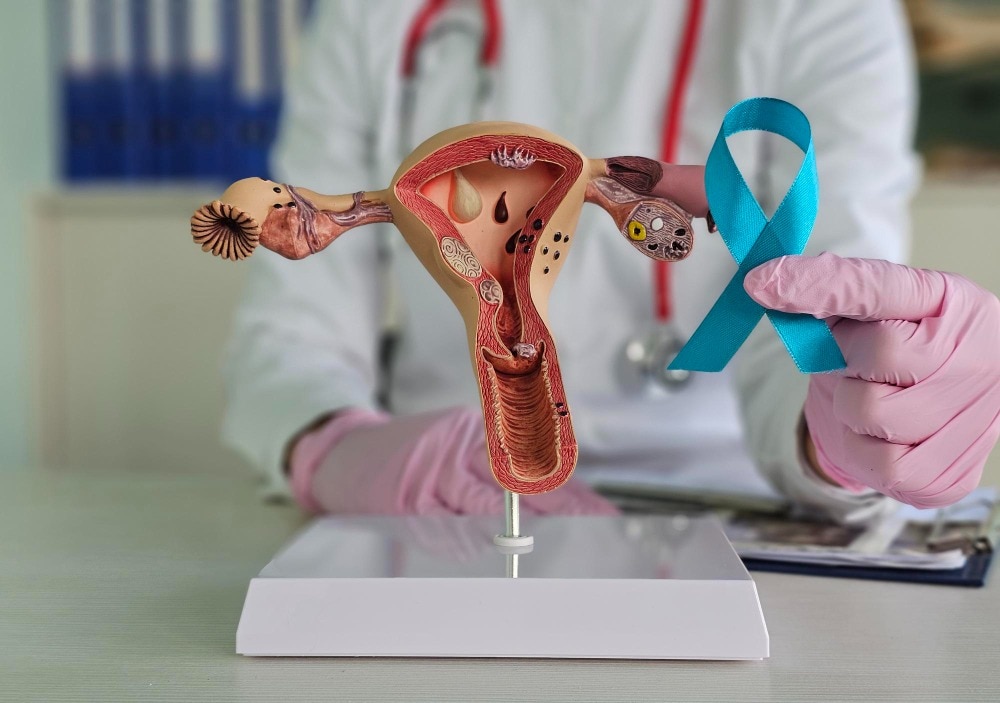
Choosing care for suspected or confirmed fallopian tube cancer requires more than finding a surgeon who offers minimally invasive procedures. By comparing specialist training, cancer-operation experience, pathology and chemotherapy coordination, surgical options, and hospital logistics, you can judge which team is equipped for complex tubo-ovarian cancer care.
Key takeaways
- Choose a gynecologic oncologist to coordinate staging, surgery, chemotherapy, and genetic testing.
- Ask how FIGO stage and residual disease goals will change your treatment sequence.
- Compare robotic, laparoscopic, and open surgery by cancer clearance, not incision size.
- Check multidisciplinary support, pathology review, genetics, chemotherapy, and follow-up planning.
Which specialist should lead fallopian tube cancer care?
A gynecologic oncologist should usually lead suspected or confirmed fallopian tube carcinoma because it follows the epithelial ovarian and primary peritoneal cancer pathway, not a routine tubal-surgery pathway. This specialist coordinates staging, cytoreductive surgery, systemic treatment and genetic testing.
| Role | Main responsibility | Limitation to check |
|---|---|---|
| General gynecologist | Routine reproductive and pelvic conditions | May not perform advanced cancer staging or debulking |
| Gynecologic oncologist | Cancer staging, cytoreductive surgery and treatment coordination | Confirm formal gynecologic-oncology training and comparable case volume |
| Surgical oncologist | Cancer operations, including non-gynecologic sites | May not specialise in tubo-ovarian cancer pathways |
| Medical oncologist | Chemotherapy and other drug treatment | Usually does not perform cancer surgery |
For a gynecologic oncologist comparison in Pune, ask for documented answers to this checklist:
- How many tubal and tubo-ovarian cancers does the team treat annually?
- Does the surgeon perform advanced upper-abdominal cytoreduction, including diaphragm, liver-surface or spleen procedures?
- Are colorectal and urinary-tract specialists, intensive care and transfusion support available?
- Who reviews pathology, and can the team arrange germline and tumour genetic testing?
- Who coordinates chemotherapy, maintenance treatment and follow-up?
- Does a regular multidisciplinary tumour board review each case?
There is no universal “best fallopian tube cancer doctor in Pune.” Compare similar-case experience, the likelihood of complete gross resection when appropriate, and the team’s plan after surgery—not merely a title, robot or hospital location.
How diagnosis and FIGO staging determine the treatment plan
1. Begin with a pelvic examination and transvaginal ultrasound. The examination may reveal a mass or tenderness; ultrasound assesses the tube, ovary, uterus, blood flow, fluid, and features such as solid areas or papillary projections.
2. Add contrast-enhanced CT of the chest, abdomen, and pelvis when ultrasound or examination suggests malignancy, or when spread must be mapped. MRI can clarify an indeterminate pelvic mass and its relationship to the tube, ovary, uterus, bowel, or bladder.
3. Use CA-125, complete blood count, kidney and liver tests, and other markers selected for the differential diagnosis. CA-125 supports assessment and later monitoring, but it cannot diagnose fallopian tube cancer because endometriosis, fibroids, pelvic infection, menstruation, and other benign conditions can raise it.
4. Confirm cancer with a biopsy when safe and appropriate, or with surgical tissue. Ask for expert pathology review confirming histologic type and grade. The fimbrial end is an important origin site for many high-grade serous tubo-ovarian cancers.
5. During staging surgery, record operative disease, collect peritoneal washings, biopsy suspicious areas, perform omentectomy, and assess lymph nodes before assigning FIGO stage for fallopian tube carcinoma. These findings determine whether surgery, chemotherapy, or both are needed.
6. A fallopian tube cancer clinic in Pune should arrange germline testing for epithelial disease and tumour testing for relevant homologous-recombination or mismatch-repair findings when indicated. Results can affect PARP-inhibitor discussions and relatives’ risk management. Risk-reducing salpingectomy or salpingo-oophorectomy for high-risk patients is prevention, not treatment of established cancer.
When surgery comes first, and when chemotherapy comes first
Primary cytoreductive surgery is considered when imaging shows disease that the team can remove safely, your health supports a major operation, and complete gross resection is realistically achievable.
Neoadjuvant chemotherapy uses platinum-based treatment first, followed by interval cytoreductive surgery, when disease burden, medical fitness, or a low likelihood of complete upfront resection makes that sequence safer or more effective.
| Option | What it involves | When it fits |
|---|---|---|
| Primary cytoreductive surgery | Surgery first, followed by platinum-based chemotherapy | Imaging and examination support safe, complete gross resection |
| Neoadjuvant chemotherapy | Platinum-based chemotherapy, then interval cytoreductive surgery | Extensive disease, limited fitness, or unlikely complete upfront cytoreduction |
Ask the specialist to explain the individual reason for the recommendation, not present one sequence as universal. Pathology, imaging, genetic results, and multidisciplinary review can change chemotherapy choices and maintenance-treatment discussions.
For a fallopian tube cancer specialists in Pune comparison, check whether the team can manage:
- Peritoneal disease, adhesions, bowel or urinary-tract involvement, upper-abdominal spread, diaphragm or liver-surface disease, spleen involvement, and lymph-node assessment
- Blood-loss planning, transfusion support, postoperative intensive-care access, and emergency admission
- Referral pathways for colorectal, urologic, hepatobiliary, and other specialist procedures
A capable team should also coordinate pathology review, genetic testing, chemotherapy, and follow-up. The key comparison is not the operation’s label; it is whether the team can achieve the intended cancer outcome safely.
Robotic, laparoscopic, or open surgery: what should you compare?
The oncologic objective comes first: remove all visible tumour when that is safely achievable. A smaller incision is valuable only when disease distribution still permits adequate staging or complete gross resection.
| Approach | Strength | Main concern |
|---|---|---|
| Robotic | Precise instruments and smaller incisions in selected cases | Requires safe specimen removal and a defined open-conversion plan |
| Laparoscopic | Smaller incisions and potentially faster recovery for suitable disease | Diagnostic or early-stage skill does not prove advanced debulking experience |
| Open | Direct access for extensive cytoreduction and combined procedures | Larger incision, longer recovery, and greater postoperative support needs |
Open surgery may better fit bulky disease, extensive peritoneal or upper-abdominal spread, bowel or diaphragm involvement, unstable health, or a need for rapid treatment after multidisciplinary review. Diagnostic laparoscopy is not the same as primary or interval cytoreduction; ask about routine experience with advanced cancer debulking.
For a gynecologic oncologist comparison in Pune, ask these questions:
- What proportion of comparable primary and interval cases achieves complete gross resection?
- How will the specimen be removed without tumour spillage?
- When would you convert to open surgery, and who can perform bowel, diaphragm, spleen, or liver-surface procedures?
- Is postoperative intensive care available, along with interventional radiology for bleeding or drainage complications?
- What recovery time, hospital stay, and possible stoma risk apply to my operation?
Choose the approach that best serves complete resection, not the one that advertises newer equipment.
How to compare a Pune cancer team beyond its location
Compare the whole pathway, not the travel time. A fallopian tube cancer clinic in Pune should show gynecologic-oncology experience with primary and interval cytoreduction, not only a surgical robot or diagnostic laparoscopy.
Ask these questions before choosing a team:
- Who will personally perform the cancer operation, and how many primary and interval cytoreductions does the team handle each year?
- Will the team review original CT or MRI scans, pathology slides or blocks, CA-125 trends, and the proposed operation?
- Does a weekly multidisciplinary tumour board review complex cases?
- What are the pathology turnaround time, genetic-testing route, chemotherapy and transfusion support, emergency admission process, and intensive-care capacity?
- Are colorectal, urinary-tract, upper-abdominal, and interventional-radiology specialists available?
- Will the same team maintain communication between the surgeon and medical oncologist?
| Option | What to compare | Warning sign |
|---|---|---|
| Upfront surgery | Likelihood of safe complete cytoreduction and hospital support | No explanation of disease extent or resection plan |
| Chemotherapy first | Reason chemotherapy improves the chance or safety of interval surgery | Sequence presented as a universal rule |
| Robotic or laparoscopic surgery | Specimen removal, conversion-to-open plan, and advanced cancer experience | Technology described without oncologic outcomes |
A second opinion is worthwhile when the recommendation says only “robotic” or “laparoscopic,” disease spread remains unclear, or surgery first versus chemotherapy first lacks a patient-specific rationale. For someone considering Dr kunaal Shinde - Best Gynecologist - 08048037552, compare the hospital pathway and answers on pathology, systemic treatment, complications, and follow-up—not the practice name.
An oncology specialist near Baner should meet the same scorecard.
Frequently asked questions
Which specialist should lead fallopian tube cancer care?
A gynecologic oncologist should usually lead care because fallopian tube carcinoma follows the epithelial ovarian and primary peritoneal cancer pathway. This specialist coordinates staging, cytoreductive surgery, systemic treatment, and genetic testing.
How do diagnosis and FIGO staging determine the treatment plan?
The diagnosis and FIGO stage help determine whether disease is confined to the tubes or has spread to the ovaries, peritoneum, lymph nodes, or distant organs. Those findings guide the choice and timing of surgery, chemotherapy, and additional treatment.
When does surgery come first, and when does chemotherapy come first?
Surgery may come first when the team expects complete or near-complete cytoreduction and the patient can safely undergo the procedure. Chemotherapy before surgery may be selected when disease is extensive, complete removal is unlikely initially, or medical fitness requires tumour reduction first.
How should you compare robotic, laparoscopic, and open surgery?
Compare each approach by whether it can achieve appropriate staging and remove visible disease safely. Robotic and laparoscopic procedures offer smaller incisions in selected cases, while open surgery can provide access required for extensive disease.
How can you compare a Pune cancer team beyond its location?
Ask about gynecologic oncology experience, pathology review, FIGO staging, multidisciplinary planning, genetic counselling, chemotherapy coordination, intensive-care support, and follow-up after complex surgery.
Keywords