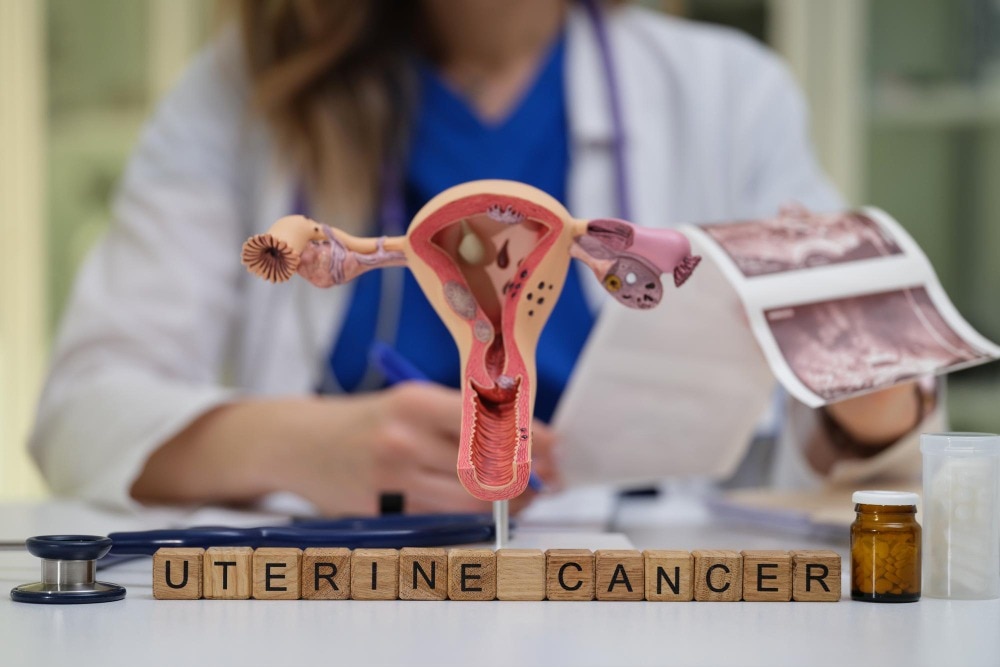
Choosing care after an abnormal scan or biopsy involves more than finding the closest gynecology clinic. You need to identify the right cancer specialist, confirm that pathology and staging services are available, and compare treatment access across Baner, Pashan, Aundh and Balewadi before booking an appointment.
Key takeaways
- Search hospitals serving Baner, Pashan, Aundh and Balewadi.
- Contact a gynaecologic oncologist after an abnormal uterine result.
- Ask how biopsy, imaging and staging decisions will be coordinated.
- Compare surgery, radiation, chemotherapy and follow-up before choosing a centre.
How Baner, Pashan, Aundh and Balewadi fit into your search
If you are deciding where to find uterine cancer care near baner in pune, begin with hospitals or cancer centres serving Baner and its neighbouring areas, not with a locality label alone.
A nearby gynecology clinic can identify an abnormality and arrange referral, but it may not provide cancer staging, surgery and follow-up under one coordinated team.
- Baner: Start here for convenience, then confirm hospital admission and operating access for the consulting specialist.
- Pashan: Treat a “uterine cancer specialist Pashan” result as a location lead, not proof of gynecologic-oncology training.
- Aundh: For a “uterine cancer doctor Aundh” search, ask whether the doctor operates at a hospital with cancer pathology and intensive-care support.
- Balewadi: For uterine cancer treatment Balewadi, verify coordination between surgery, pathology, chemotherapy and radiotherapy.
A complete pathway includes a gynecologic oncologist, surgical pathology and cross-sectional imaging such as MRI or CT. Ask who will perform the operation, where the biopsy and final specimen will be examined, and whether a pathologist experienced in gynecologic malignancy reviews them.
Confirm that medical oncology is available for systemic treatment and that radiation oncology referral is arranged without a new search. Robotic surgery alone does not prove comprehensive care. The facility should also explain how cases are reviewed jointly and who provides follow-up after treatment.
Which specialist should you contact after an abnormal result?
After an abnormal endometrial biopsy, hysteroscopy report or suspicious scan, contact a gynecologic oncologist first. This specialist can review the diagnosis, plan staging surgery and coordinate medical or radiation treatment. A general gynecologist can make the initial referral, but do not assume a listing such as “uterine cancer doctor Aundh” represents gynecologic-oncology expertise.
| Specialist | What they do | When you need them |
|---|---|---|
| Gynecologist | Evaluates bleeding and performs initial tests | Before cancer is confirmed, or for referral |
| Gynecologic oncologist | Plans cancer staging and pelvic surgery | First specialist after a suspicious or confirmed result |
| Medical oncologist | Prescribes chemotherapy, immunotherapy, hormone therapy or targeted treatment | When systemic treatment is indicated |
| Radiation oncologist | Plans external-beam or brachytherapy | When radiation forms part of treatment |
| Pathologist | Identifies type, grade, invasion and molecular findings | For biopsy review and final specimen review |
| Surgical oncologist | Operates on cancers outside the female reproductive system | When another organ or cancer team requires that expertise |
Treat “uterine cancer specialist Pashan” as a locality search, not proof of training. Ask whether the doctor regularly performs uterine cancer staging surgery and has hospital access for intensive care, gynecologic pathology and oncology follow-up. If pathology suggests leiomyosarcoma or another sarcoma, request a multidisciplinary gynecologic-oncology or sarcoma team.
Take these items to the appointment:
- Pathology report, biopsy slides or tissue-block details
- Ultrasound, MRI or CT images and reports; include PET-CT if performed
- Blood-test results, medication list and allergies
- Previous operation notes, discharge summaries and referral letters
Ask who will review the slides, where pathology is processed and how medical or radiation oncology will be arranged.
How doctors confirm uterine cancer and determine its stage
A biopsy confirms uterine cancer by examining endometrial tissue under a microscope. An ultrasound or MRI can show a suspicious lining or mass, but imaging alone cannot establish the diagnosis.
Doctors use each test for a different question:
- Endometrial biopsy samples tissue through the cervix, often in the clinic.
- Hysteroscopy lets the doctor inspect the uterine cavity and target a visible polyp, mass or irregular area. Dilation and curettage may collect a larger sample when an office biopsy is insufficient.
- Pelvic MRI shows tumour size, myometrial invasion and possible cervical involvement. CT of the chest, abdomen and pelvis looks for enlarged nodes or spread beyond the uterus; PET-CT is reserved for selected staging questions.
- Pathology review confirms the histologic subtype, such as endometrioid, serous or clear-cell carcinoma, and assigns grade based on how abnormal and aggressive the cells look.
- Staging tests combine examination, imaging, surgical findings and lymph-node assessment to determine whether disease remains in the uterus or has spread.
Ask whether a pathologist experienced in gynecologic malignancy will review the biopsy slides and final surgical specimen. Depth of invasion, lymphovascular-space invasion, cervical or extra-uterine disease, and molecular results such as MMR, p53 or POLE status can alter treatment.
A search for “uterine cancer specialist Pashan” is only a locality search. Confirm training in gynecologic oncology and experience with cancer staging surgery.
What treatment routes should you compare before choosing a centre?
The main operation for many apparent early-stage endometrial cancers is total hysterectomy with removal of both fallopian tubes and ovaries. Doctors also assess lymph-node risk using histology, grade, imaging and molecular findings such as POLE, mismatch-repair and p53 status.
| Option | What it means | When it applies |
|---|---|---|
| Hysterectomy | Removes the uterus, usually with tubes and ovaries | Cancer confined to the uterus or requiring surgical staging |
| Lymph-node assessment | Sentinel-node mapping or selected node removal checks spread | Based on tumour grade, type, imaging and molecular risk |
| Radiation | Brachytherapy treats the vaginal cuff; external-beam radiation treats a wider pelvic area | Higher recurrence risk, cervical involvement or residual local risk |
| Chemotherapy | Systemic drugs treat cancer cells throughout the body | High-risk disease, spread beyond the uterus or recurrence |
| Hormone therapy | Progestins or other hormone-directed treatment slows hormone-sensitive cancer | Selected advanced, recurrent or fertility-preserving cases |
| Immunotherapy | Helps the immune system attack cancer, often guided by mismatch-repair status | Advanced or recurrent disease, especially mismatch-repair-deficient tumours |
| Targeted treatment | Blocks a specific cancer pathway or marker | Molecular findings and prior treatment determine eligibility |
Laparoscopic or robotic surgery uses small incisions and often shortens recovery for suitable early-stage cases. Open surgery can be safer for bulky disease, extensive extra-uterine spread, technical limitations or concern that minimally invasive surgery will not remove cancer completely. A robot is an access technique, not proof of better cancer control.
When comparing uterine cancer treatment Balewadi, confirm that one centre coordinates surgery, expert pathology, chemotherapy and radiotherapy. Search locality labels such as “uterine cancer specialist Pashan” do not prove gynecologic-oncology expertise.
How to verify a local uterine cancer service before you book
Before booking, confirm that the service can carry you from diagnosis through treatment and surveillance. A search for where to find uterine cancer care near Baner in Pune should identify more than a nearby clinic: look for gynecologic oncology, surgical pathology, MRI or CT access, medical oncology and radiation-oncology referrals.
Ask these questions directly:
- Who will perform the operation, and how often do they perform uterine cancer staging surgery rather than only benign laparoscopic procedures?
- Does a gynecologic-oncology team review cases together, and can the hospital provide intensive care if complications occur?
- Where are the biopsy slides or tissue blocks examined, and can a specialist pathologist review them?
- How quickly can pelvic MRI or CT be arranged, and who interprets the images?
- Who will provide chemotherapy, hormone treatment or immunotherapy, and who coordinates radiotherapy?
- What appointments, scans and examinations are included after surgery?
| Check | Ask | Warning sign |
|---|---|---|
| Operating surgeon | Name, oncology training and hospital operating privileges | The clinic will not identify the surgeon |
| Pathology | Laboratory location and second-review process | Diagnosis rests on a report nobody will reassess |
| Hospital access | Admission, intensive care and emergency arrangements | Surgery occurs without clear hospital backup |
| Follow-up | Named oncology team and schedule for reviews | You are told to arrange each referral alone |
For uterine cancer treatment balewadi, robotic surgery alone proves nothing about cancer completeness. If comparing a uterine cancer doctor Aundh, ask the same questions. Dr kunaal Shinde - Best Gynecologist - 08048037552 should also clarify these pathways before you book.
Related service
Gynec Cancer Treatment Uterine Cancer Treatment Specialist in Baner,Pashan,Balewadi,Aundh,Pune Comprehensive Uterine Cancer Treatment in Pune If you are looking for the best uterine cancer treatment specialist in Pune, Dr. Kunaal K. View service → |
Frequently asked questions
How do Baner, Pashan, Aundh and Balewadi fit into a uterine cancer care search?
Use these neighbouring Pune areas to identify reachable hospitals and cancer centres, then compare their specialists, diagnostic services, treatment coordination and follow-up arrangements.
Which specialist should you contact after an abnormal uterine cancer result?
Contact a gynaecologist or, when cancer is suspected or confirmed, a gynaecologic oncologist who can coordinate tissue diagnosis, staging and treatment planning.
How do doctors confirm uterine cancer and determine its stage?
Doctors use examination, endometrial sampling or biopsy, pathology, and imaging when indicated. The final stage depends on how far the cancer has spread, including whether it involves the cervix, lymph nodes or distant organs.
What should you compare before choosing a uterine cancer treatment centre?
Compare the centre’s surgical expertise, access to pathology and imaging, radiation and medical oncology support, multidisciplinary planning, recovery guidance and long-term follow-up.
Keywords