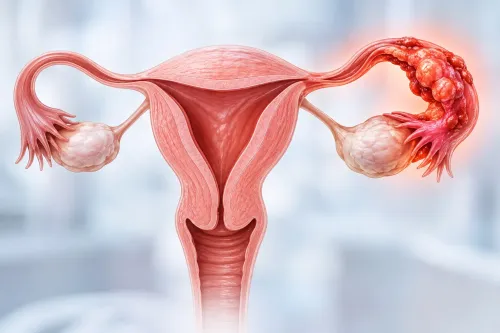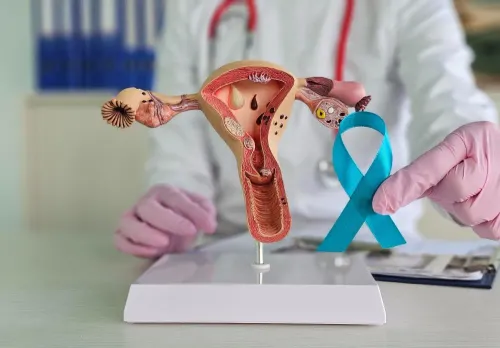
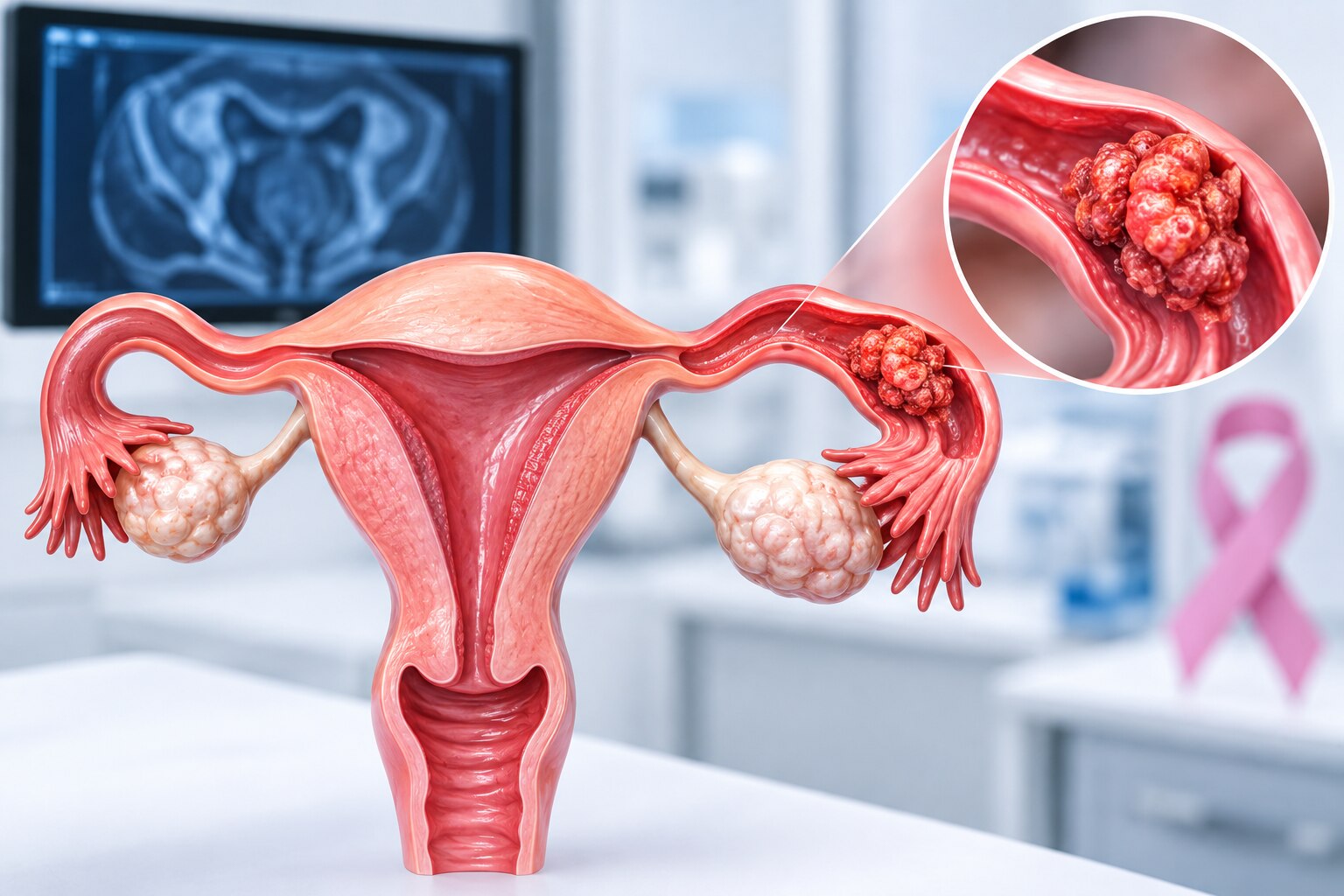
A pelvic mass is not enough to determine whether cancer began in the fallopian tube, ovary, or peritoneum, and the treatment decision changes with pathology, FIGO stage, tumour spread, health, and personal priorities. By the end, you will know which test results drive surgery, chemotherapy, genetic testing, maintenance treatment, and recurrence planning.
Key takeaways
- Confirm the cancer’s tissue type and true primary site before choosing treatment.
- Use FIGO stage and surgical fitness to decide whether surgery or chemotherapy comes first.
- Ask how residual tumour after surgery changes chemotherapy and follow-up planning.
- Request pathology, BRCA, and other molecular test results before finalising drug treatment.
How doctors confirm fallopian tube cancer and identify its true origin
Before treatment, doctors must confirm that the mass is cancer, identify its tissue type, and establish whether the fallopian tube is truly the primary site. A pelvic mass is not automatically primary fallopian tube cancer.
- A pelvic examination and transvaginal ultrasound assess the uterus, ovaries, tubes, and mass. CT of the chest, abdomen, and pelvis maps spread; MRI is used when ultrasound cannot define pelvic anatomy or local invasion clearly.
- Doctors obtain a biopsy when it can be done safely, or surgical tissue during an operation. Pathologists review the cells and use immunohistochemistry to distinguish tubo-ovarian cancer from uterine, gastrointestinal, or metastatic disease.
- The report should identify histologic type and grade: high-grade serous, low-grade serous, endometrioid, clear-cell, or mucinous carcinoma. Review of the fimbrial end of the tube, operative findings, and serous tubal intraepithelial carcinoma (STIC) can support a tubal origin.
- Staging includes abdominal and pelvic assessment, imaging, peritoneal surfaces, pelvic and para-aortic lymph nodes, and pleural-fluid cytology when fluid is present.
Fallopian tube carcinoma is managed within the same framework as epithelial ovarian and primary peritoneal cancer because these cancers share biology, spread patterns, and treatment principles. Expert gynecologic-pathology review therefore matters for fallopian tube cancer treatment matched to diagnosis in Pune. Compare treatment options only after the pathology, origin, grade, and FIGO stage are documented.
How FIGO stage and surgical fitness determine the first treatment step
Surgery is performed first when the team expects complete or near-complete cytoreduction with acceptable morbidity. For fallopian tube cancer treatment planning in Pune, FIGO stage is not based on mass size alone.
It records whether disease remains in the tube or ovary, has spread through the pelvis, involves peritoneum outside the pelvis, retroperitoneal lymph nodes, positive pleural-fluid cytology, or distant organs.
Doctors also weigh tumour distribution, symptoms, age, nutrition, heart and lung health, kidney function, anaesthetic risk, and recovery capacity. The key question is whether an operation can remove nearly all visible disease without causing an unrewarding, high-morbidity procedure.
| Option | What it means | When it applies |
|---|---|---|
| Primary cytoreductive surgery | Surgery removes visible disease first, followed by platinum-taxane chemotherapy | Complete or near-complete removal appears achievable and major surgery is medically acceptable |
| Neoadjuvant chemotherapy | Platinum-based chemotherapy is given before surgery, followed by interval cytoreduction | Complete removal is unlikely initially or immediate major surgery carries excessive risk |
Neoadjuvant treatment is an accepted alternative, not a lesser treatment. Interval surgery is commonly considered after three or four cycles, with at least six total systemic-therapy cycles under the oncology team’s protocol. The trade-off is clear: primary surgery removes tumour earlier, while chemotherapy first can avoid a dangerous operation that leaves substantial disease behind.
The final choice requires review by a gynaecologic oncology team.
What the operation removes and why residual tumour changes the plan
The operation removes the primary tumour and maps disease throughout the abdomen, not just the visible fallopian-tube mass. A staging or cytoreductive procedure may include:
- Removing the uterus and cervix, both fallopian tubes, and both ovaries when fertility preservation is not appropriate.
- Performing peritoneal washings before tumour manipulation, removing the omentum, and biopsying suspicious peritoneal areas.
- Assessing or removing pelvic and para-aortic lymph nodes to identify hidden spread.
The surgeon aims to remove all visible tumour when this is safely achievable. Optimal cytoreduction means minimal or no residual visible disease; remaining tumour is linked to prognosis and influences postoperative chemotherapy, maintenance treatment, and follow-up planning.
Laparoscopy or robotic surgery is not automatically the best approach. Selected early-stage, restaging, or interval operations may suit minimally invasive surgery when complete staging or cytoreduction is feasible without tumour rupture. Extensive upper-abdominal or bowel disease may require open surgery to preserve oncological quality.
The plan changes with fertility goals, the risk of premature menopause, tumour distribution, rupture risk, and your fitness for prolonged anaesthesia or bowel surgery. Fertility-sparing surgery is considered only for carefully selected disease.
Final pathology can redirect the next step. Review the histologic type, grade, FIGO stage, margins, lymph nodes, peritoneal involvement, and treatment response, because these findings can reveal a need for additional chemotherapy or a different surveillance plan.
How pathology, molecular tests, and recurrence timing guide drug treatment
Most advanced high-grade epithelial fallopian tube cancers receive a platinum-taxane combination, commonly carboplatin with paclitaxel, after surgery or biopsy. Chemotherapy can remain necessary after complete visible tumour removal because microscopic disease may persist on the peritoneum. Cycle number and timing depend on pathology, FIGO stage, surgery, response, organ function, and the treating team’s protocol.
Testing should include:
- Germline BRCA1/2 and other hereditary-cancer testing for every patient with epithelial fallopian tube, ovarian, or primary peritoneal cancer, not only those with a strong family history.
- Tumour BRCA1/2 testing.
- Tumour homologous-recombination deficiency testing.
After a response, maintenance treatment is discussed rather than prescribed automatically. A BRCA mutation or homologous-recombination deficiency can support a PARP-inhibitor discussion; selected patients may receive bevacizumab. Blood pressure, kidney function, clotting or bleeding risk, treatment toxicity, previous therapy, access, and cost all affect that choice.
Recurrence timing changes later drug selection. Comparing fallopian tube cancer care options in pune is more useful when the record states whether recurrence is platinum-sensitive or platinum-resistant.
| Status | Definition | Treatment implication |
|---|---|---|
| Platinum-sensitive | Recurs more than six months after platinum treatment | Another platinum combination, maintenance strategy, or trial may be considered |
| Platinum-resistant | Progresses during treatment or within six months | Non-platinum drugs, targeted treatment, or clinical trials often receive greater attention |
The distinction guides treatment, but pathology, symptoms, fitness, prior toxicity, and patient preference still determine the final plan.
How to compare a personal care plan and prepare for specialist advice in Pune
Ask for the evidence behind each decision, not only the name of the operation or drug. Your records should state the confirmed primary site, histologic type and grade, FIGO stage, lymph-node findings, surgical margins, BRCA1/2 results, and homologous-recombination status.
| Surgery first | Complete cytoreduction appears realistic and your health supports major surgery | Removes visible disease sooner but carries operative risks |
|---|---|---|
| Chemotherapy first | Disease distribution makes complete removal unlikely, or immediate surgery is unsafe | Reduces tumour burden before interval surgery; response must be assessed |
| Recurrence options | Secondary cytoreduction is considered only when complete removal appears feasible | Systemic therapy, a clinical trial, or symptom-focused care may offer greater benefit |
Before accepting the plan, ask:
- Is complete cytoreduction realistic, and what imaging or operative findings support that judgment? Why is surgery or chemotherapy recommended first?
- What are the effects on fertility, premature menopause, sexual function, urinary symptoms, nutrition, recovery time, and daily activities?
- How will you prevent venous thromboembolism, manage taxane-related neuropathy, and provide psychosocial support?
- Has the case been reviewed by a gynecologic oncologist, radiologist, pathologist, medical oncologist, and genetics professional?
That multidisciplinary review helps match the operation and medicines to the pathology and stage. For fallopian tube cancer specialist advice in pune, Dr kunaal Shinde - Best Gynecologist - 08048037552 can help review operative findings, pathology, imaging, and the proposed sequence of care. Bring the full reports, imaging discs, medication list, and questions in writing.
Frequently asked questions
How do doctors confirm fallopian tube cancer and identify its origin?
Doctors combine pelvic imaging, tissue biopsy or surgical specimens, pathology, and assessment of the ovaries, uterus, peritoneum, and other possible primary sites.
How do FIGO stage and surgical fitness affect the first treatment step?
FIGO stage shows how far the cancer has spread, while surgical fitness reflects whether you can safely undergo major surgery. Together they help determine whether surgery or chemotherapy comes first.
What does surgery for fallopian tube cancer remove?
Treatment may involve removing the uterus, both ovaries and fallopian tubes, the omentum, visible tumour deposits, and selected lymph nodes, depending on the disease pattern and operative findings.
How do pathology, molecular tests, and recurrence timing guide drug treatment?
Pathology confirms tumour characteristics, molecular tests such as BRCA and homologous recombination deficiency testing help identify targeted treatment options, and the time since prior therapy helps guide recurrence treatment.
Keywords