Persistent pelvic symptoms, an abnormal scan, or a pathology report can leave you unsure whether to seek emergency treatment, a gynecologist, or a gynecologic oncologist. You will learn which warning signs need same-day hospital evaluation, what testing can and cannot show, and how to choose specialist care near Baner, Pashan, Aundh, or Balewadi.
Key takeaways
- Seek emergency care for severe pain, fainting, heavy bleeding, or breathing difficulty.
- CA-125 cannot confirm fallopian tube cancer on its own.
- Ask a gynecologic oncologist to review imaging before biopsy or surgery.
- Compare hospital access, emergency support, and specialist availability near Baner.
When symptoms require emergency care rather than an outpatient appointment
Severe or rapidly worsening symptoms need same-day emergency assessment, not an outpatient consultation. Severe sudden pelvic or abdominal pain, fainting, heavy vaginal bleeding, repeated or persistent vomiting, fever, marked abdominal distension, breathlessness, or inability to pass urine or stool can signal torsion, internal bleeding, infection, obstruction, or another acute condition.
| Seek same-day emergency care | Arrange a prompt specialist appointment |
|---|---|
| Severe sudden pain, fainting, heavy bleeding, persistent vomiting, fever, marked distension, breathlessness, or inability to pass urine or stool | Abnormal bleeding, watery or blood-stained discharge, persistent pain, bloating, early fullness, urinary or bowel pressure, fatigue, or an enlarging abdomen |
These outpatient symptoms need examination but do not prove fallopian tube cancer. Persistent or progressive symptoms justify prompt review, especially after an abnormal scan, suspicious adnexal mass, raised CA-125, or concerning pathology.
Do not wait for a fallopian tube cancer consultation when symptoms are severe or rapidly worsening. If the situation appears life-threatening, call ambulance services. A search for fallopian tube cancer for doctor near baner in pune should distinguish emergency treatment at the nearest suitable hospital from a stable patient’s prompt gynecologic oncology appointment.
What fallopian tube cancer is—and how doctors identify its origin
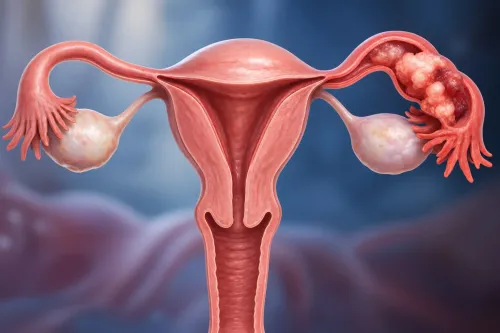
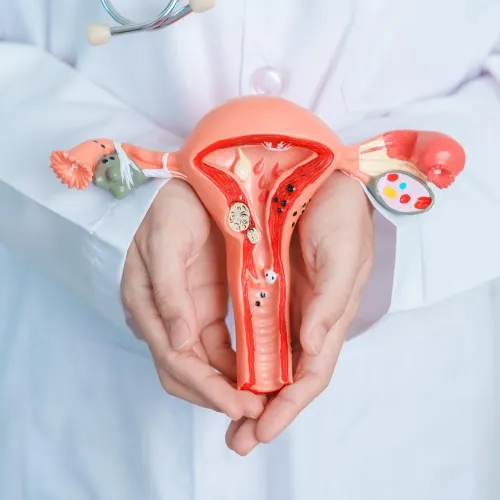
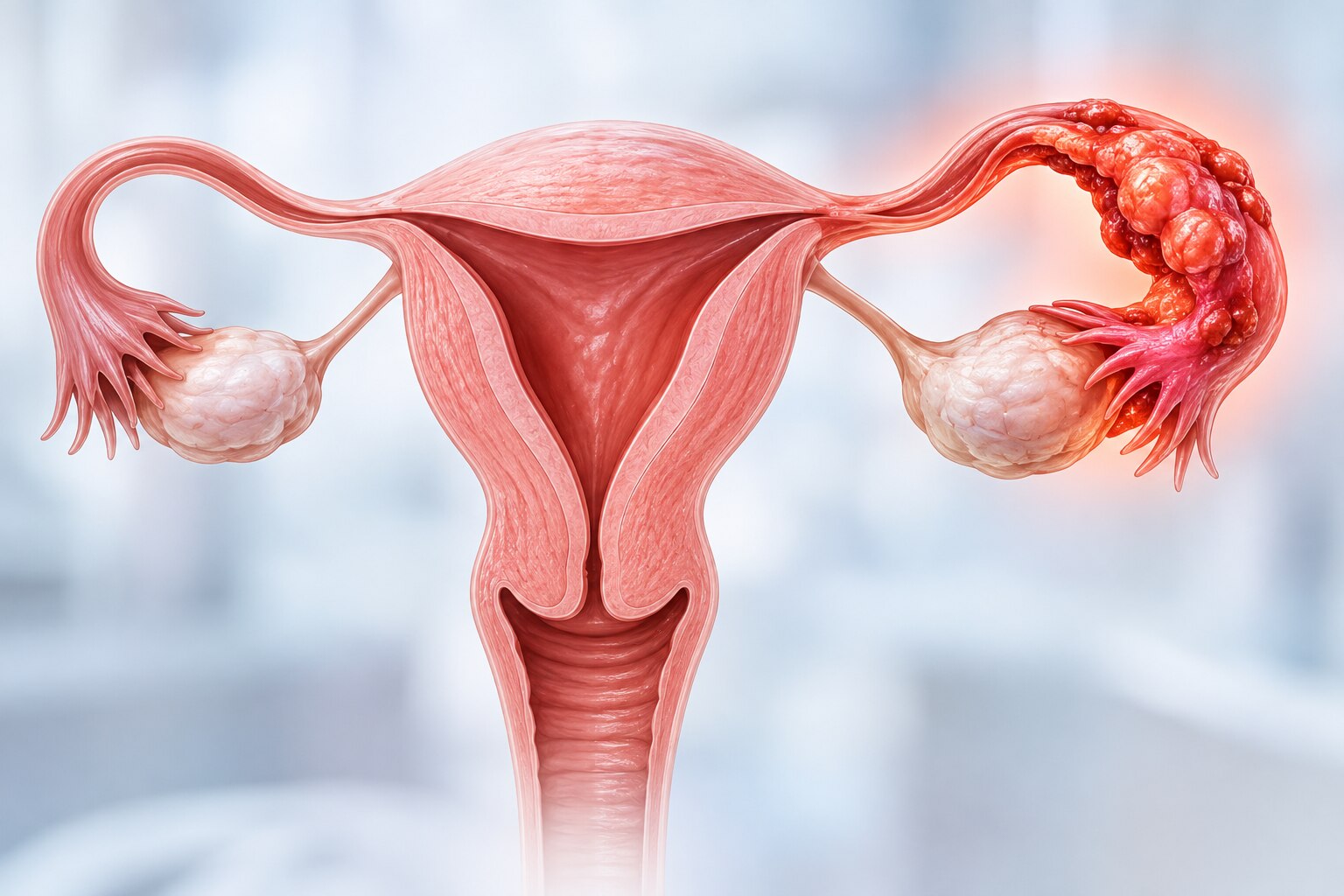
Primary epithelial fallopian-tube cancer starts in the lining of one or both tubes. Doctors evaluate it through the same clinical pathway used for epithelial ovarian and primary peritoneal cancer because symptoms cannot show which organ contains the original tumour.
Ovarian cancer begins primarily in the ovary, primary peritoneal cancer in the abdominal lining, and uterine cancer in the uterus. Doctors determine origin from operative findings and pathology: where the dominant lesion is located, and how the tubes, ovaries, peritoneum, and uterus are involved.
- FIGO stage I: cancer is confined to one or both fallopian tubes.
- FIGO stage II: cancer has extended into other pelvic organs or tissues.
- FIGO stage III: cancer has spread outside the pelvis or to retroperitoneal lymph nodes.
- FIGO stage IV: distant spread is present, such as malignant pleural effusion or parenchymal metastasis.
The distinction affects accurate documentation, counseling, FIGO staging, treatment planning, family-risk assessment, and follow-up, even when treatment overlaps substantially with epithelial ovarian cancer protocols. A fallopian tube cancer doctor pashan search should lead to a gynecologic oncology review when imaging or pathology raises this possibility, not only a general gynecology appointment.
Which tests confirm suspicion and why CA-125 is not enough
A concerning symptom, scan, or blood result usually leads to a pelvic examination and transvaginal ultrasound. Ultrasound assesses the tubes, ovaries, uterus, fluid, and features of an adnexal mass.
Doctors may request CT of the chest, abdomen, and pelvis to look for lymph nodes, peritoneal disease, or distant spread; MRI answers selected questions about tissue planes and local extension.
| Test | What it contributes | Important limit |
|---|---|---|
| CA-125 | Supports assessment and treatment planning | Not a screening test; a normal result does not rule out malignancy |
| Targeted blood tests | May include CBC, liver and kidney function, pregnancy testing, and other markers chosen for the imaging and age | No blood panel confirms fallopian tube cancer |
| Histopathology | Examines cells from a carefully planned biopsy or operative specimen | Provides the definitive diagnosis |
CA-125 can rise with endometriosis, fibroids, pelvic infection, menstruation, or liver disease. Some fallopian-tube, ovarian, and peritoneal cancers do not raise it, so never use a normal value to dismiss persistent symptoms or suspicious imaging. Imaging and markers characterize disease and guide planning; tissue diagnosis must be obtained without compromising later staging or surgery.
Bring scans on discs and reports, blood results, operative notes, and pathology slides or blocks for review. A search for fallopian tube cancer specialist aundh should prioritize planned tissue sampling and multidisciplinary review, not proximity or CA-125 alone.
Why a gynecologic oncologist should review the case before biopsy or surgery
A suspected fallopian-tube cancer needs review by a gynecologic oncologist before biopsy or surgery is chosen. A poorly planned biopsy or limited operation can rupture the mass, spill tumour cells, leave the disease unstaged, and force you to undergo a second major operation.
Histopathology remains essential, but tissue must be obtained in a way that preserves future treatment options.
1. For a fit patient whose disease appears removable, staging surgery may include peritoneal washings, removal of the uterus with both fallopian tubes and ovaries when appropriate, omentectomy, inspection and biopsy of suspicious peritoneal areas, and selected lymph-node assessment. The operation depends on disease distribution, fertility wishes, age, and surgical risk.
2. Advanced disease may require cytoreduction, aiming for no visible residual disease. If complete upfront removal is unlikely or the patient is not fit for major surgery, doctors may obtain tissue first, give carboplatin plus paclitaxel, and perform interval surgery after treatment response.
3. Laparoscopic or robotic surgery suits selected limited cases only. Bulky disease, adhesions, upper-abdominal spread, or extensive cytoreduction may favour open surgery to avoid rupture and complete the procedure safely.
Every patient with epithelial fallopian-tube cancer should receive germline counseling and testing, regardless of age or family history. Tumour BRCA1/2 and homologous-recombination testing can guide maintenance treatment and identify risks for relatives. A gynecologic oncology doctor in Pune should review the scans, pathology plan, and fitness for surgery before consent.
How to choose urgent specialist care near Baner, Pashan, Aundh, or Balewadi
Distance is not the deciding factor when comparing a fallopian tube cancer doctor near Baner in Pune, a fallopian tube cancer doctor in Pashan, a fallopian tube cancer specialist in Aundh, or fallopian tube cancer care in Balewadi. Choose the service that can coordinate cancer treatment, not only offer a nearby appointment.
| Route | When to use it | What happens next |
|---|---|---|
| Emergency department | Severe or rapidly worsening pain, fainting, heavy bleeding, persistent vomiting, fever, marked distension, breathlessness, or inability to pass urine or stool | Same-day assessment for obstruction, torsion, infection, or internal bleeding; use an ambulance for a life-threatening emergency |
| Urgent specialist review | Stable patient with a suspicious adnexal mass, elevated CA-125, high-grade serous carcinoma, or cancer discovered after surgery | Prompt examination and review of imaging, pathology, and treatment options |
| Routine second opinion | Stable patient seeking confirmation after a complete evaluation | Planned review of records without delaying necessary treatment |
Before booking, ask whether the team provides:
- Gynecologic oncology training and experience with fallopian-tube, ovarian, and primary peritoneal cancers
- Multidisciplinary review of scans and pathology
- Major cytoreductive surgery, chemotherapy, genetic counseling, intensive care, blood-bank support, and emergency admission
Dr kunaal Shinde - Best Gynecologist - 08048037552 can be a local consultation option, but the appropriate clinician must examine you and review your records, imaging, pathology slides or blocks, then arrange hospital or tertiary referral when required.
Related service
Gynec Cancer Treatment Best Fallopian Tube Cancer Specialist in Baner, Pashan, Aundh, Balewadi,Pune Best Fallopian Tube Cancer Specialist in Pune | Advanced Robotic & Laparoscopic Cancer Surgery | Dr. Kunaal K. View service → |
Frequently asked questions
When do fallopian tube cancer symptoms require emergency care?
Seek same-day emergency assessment for severe or rapidly worsening pelvic or abdominal pain, fainting, heavy vaginal bleeding, repeated vomiting, fever, marked abdominal distension, breathlessness, or inability to pass urine or stool.
How do doctors identify whether cancer started in the fallopian tube?
Doctors combine symptoms, pelvic examination, ultrasound or CT findings, surgical observations, and pathology. The final origin depends on microscopic examination and the distribution of disease.
Can CA-125 confirm fallopian tube cancer?
No. CA-125 can rise with several cancers and non-cancerous conditions. Doctors interpret it alongside imaging and tissue pathology rather than using it as a standalone diagnosis.
Why should a gynecologic oncologist review the case before surgery?
A gynecologic oncologist can assess whether the planned biopsy or operation will obtain adequate tissue, stage the disease correctly, and avoid an incomplete procedure that requires another surgery.
Keywords