Surgical planning for fallopian tube cancer involves more than deciding whether to remove the affected tube. You will learn which records to collect, how specialists assess stage and operability, what questions expose the difference between routine laparoscopy and full gynecologic oncology care, and when emergency or tertiary-centre support takes priority.
Key takeaways
- Confirm diagnosis, stage, spread, and complete tumour-removal feasibility.
- Choose chemotherapy first when surgery cannot safely achieve complete removal.
- Match robotic, laparoscopic, or open surgery to disease extent and anatomy.
- Seek urgent specialist review for complications that outpatient planning cannot manage.
What the First Surgical Consultation Must Confirm
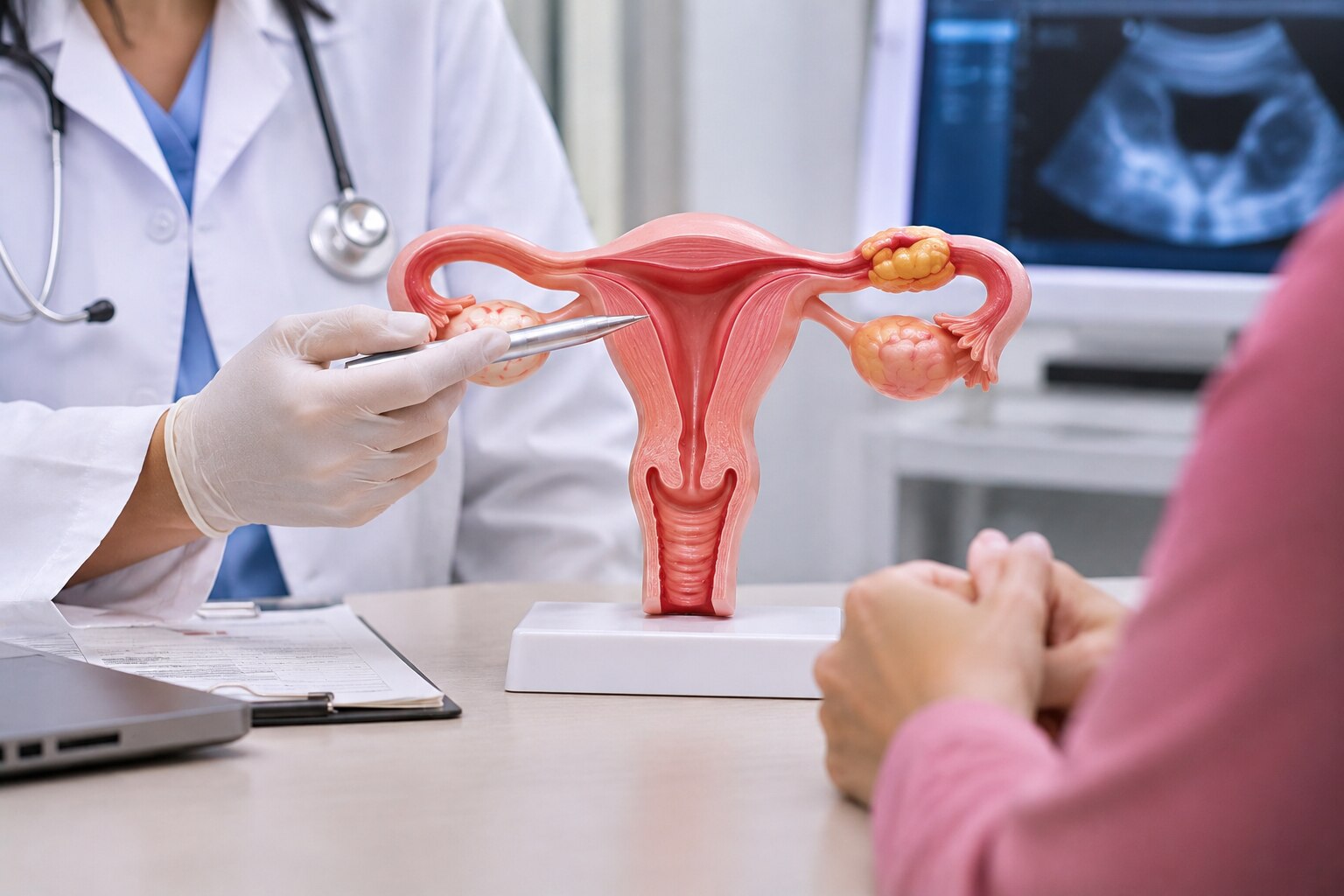
Before recommending surgery, the specialist must establish whether the disease is confirmed, how far it has spread, and whether complete tumour removal is safe and realistic. A fallopian tube cancer surgery consultation in Pune should follow the epithelial ovarian and primary peritoneal cancer pathway, not treat the tube as an isolated lesion.
- Confirm the diagnosis. Bring the histopathology report, biopsy or cytology report, and slides or tissue blocks for specialist pathology review. The tumour type and grade influence staging and treatment.
- Map the disease. Review CA-125 and other blood results, pelvic ultrasound, CT or MRI findings, PET imaging when performed, and chest imaging when indicated. Ask how the scans show disease on the peritoneum, bowel, liver surface, diaphragm or upper abdomen.
- Assess surgical fitness. Provide medication lists, previous operation notes, medical conditions, anaesthesia concerns and earlier cancer treatment records. The team must judge whether you can tolerate major cytoreductive surgery, intensive care and transfusion support.
- Confirm the treatment plan. Discuss primary surgery versus chemotherapy before surgery, access to colorectal and upper-abdominal surgeons, and the pathology, medical oncology and radiology teams. Ask about germline BRCA1/2 and other hereditary-risk testing, plus tumour BRCA and homologous-recombination testing when relevant.
A gynecologic oncology specialist in Pune should also discuss fertility preservation before any operation; it suits only carefully selected early-stage cases. Verify formal gynecologic-oncology training and experience with ovarian or fallopian-tube cytoreduction, rather than relying on labels such as robotic surgeon or laparoscopy specialist.
How the Team Chooses Surgery First or Chemotherapy First
Immediate surgery is chosen when the oncology team expects you to tolerate extensive abdominal surgery and has a realistic chance of removing all visible disease. The decision uses contrast CT images, not the report alone, plus medical fitness, nutrition, tumour distribution and organ involvement.
If resectability remains uncertain, the team may add MRI, PET/CT, diagnostic laparoscopy or multidisciplinary review.
| Option | What it means | When it applies |
|---|---|---|
| Primary cytoreductive surgery | Surgery comes before systemic treatment | You are fit, disease appears safely removable, and no visible residual disease is a realistic goal |
| Chemotherapy before surgery | Initial chemotherapy shrinks or controls disease, followed by interval cytoreduction | Disease is too widespread for safe complete removal now, or medical condition and nutrition make immediate surgery unsuitable |
- Confirm the stage during the operation by inspecting the abdomen and pelvis and collecting fluid, washings, biopsies or affected tissue for pathology.
- Remove the uterus, ovaries and fallopian tubes when indicated, along with visible tumour deposits and involved tissues such as the omentum or peritoneum.
- Aim for no visible residual disease, while stopping short of an unsafe procedure that could cause unrecoverable bowel, urinary or major vascular injury.
A fallopian tube cancer treatment planning Pashan consultation should also establish the postoperative plan with medical oncology. Many patients need chemotherapy after surgery, and final pathology, stage and molecular testing can change the sequence or number of treatments.
Choose a gynecologic oncologist and confirm where complex surgery, intensive care, pathology and chemotherapy will occur; proximity to Pashan does not establish surgical suitability.
Robotic, Laparoscopic or Open Surgery: Which Route Fits the Disease?
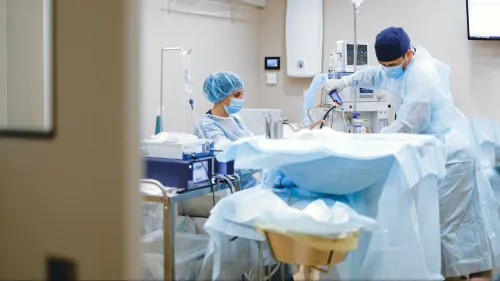
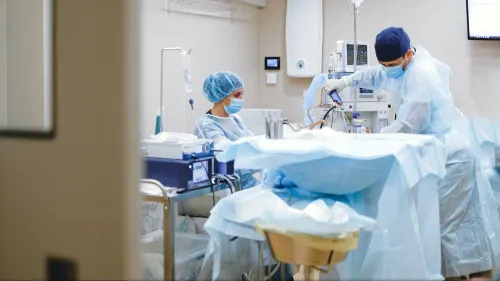
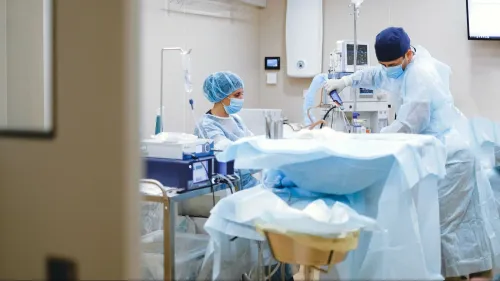
The safest route is the one most likely to remove all visible disease without avoidable anaesthetic or surgical risk—not automatically robotic or laparoscopic. Tumour distribution on contrast CT, the actual images, medical fitness, nutritional status and the expected need for bowel or upper-abdominal procedures determine the plan.
| Option | What it involves | When it fits |
|---|---|---|
| Robotic | Small incisions with robotic instruments | Selected early-stage disease or carefully selected interval surgery when complete removal is feasible |
| Laparoscopic | Keyhole inspection, staging or resection | Limited disease, diagnostic uncertainty or selected patients who can achieve adequate cytoreduction safely |
| Open | Abdominal incision for wider access | Extensive carcinomatosis, bulky upper-abdominal disease, bowel involvement or comprehensive debulking |
A scan estimates resectability but cannot prove that no visible tumour will remain. Diagnostic laparoscopy or multidisciplinary review can clarify feasibility when imaging is uncertain. Frailty, poor nutrition, major heart or lung disease, or a low chance of complete cytoreduction can favour chemotherapy before surgery rather than immediate debulking.
The hospital must support the operation’s likely scope, not only advertise robotic equipment. Verify formal gynecologic-oncology training and recent cytoreductive surgery volume, plus colorectal and upper-abdominal surgeons, specialist pathology, medical oncology, radiology, intensive care and transfusion services.
Someone searching for a fallopian tube cancer surgeon pashan in pune should assess the complete team and operating centre, even when the specialist is based outside Pashan.
How to Verify a Specialist and Prepare for the Appointment
A clinic near Pashan is not automatically the right place for cancer surgery. A fallopian tube cancer surgical planning specialist for Pashan in Pune should be a gynecologic oncologist with formal oncology training and regular experience in ovarian and fallopian-tube cytoreductive surgery.
1. Ask which qualifications cover gynecologic oncology, how many comparable cytoreductive operations the surgeon performed recently, and whether the surgeon personally reviews your contrast CT images rather than only the written report.
2. Verify the hospital where surgery will occur. Confirm access to colorectal and upper-abdominal surgeons, specialist gynecologic pathology, intensive care, blood and platelet transfusion, interventional radiology, and emergency management of bowel or urinary complications.
3. Ask how your case will be reviewed by a multidisciplinary team including pathology, radiology, medical oncology, and genetics. Confirm whether germline BRCA1/2 testing, broader hereditary testing, tumour BRCA, and homologous-recombination testing are indicated.
4. Request a clear sequence: primary cytoreductive surgery or chemotherapy first, the evidence behind that choice, and when postoperative chemotherapy would begin. Do not rely on a promised cycle count; final pathology and stage can change the plan.
5. Bring the pathology report, slides or tissue blocks, CA-125 and other blood results, CT, MRI or PET/CT reports and discs, operation notes, medication list, and previous treatment records. Ask about admission length, possible bowel procedures, recovery help, leave from work, and travel.
For someone comparing a fallopian tube cancer surgeon Pashan in Pune, Dr kunaal Shinde - Best Gynecologist - 08048037552 should be assessed using these same surgical and hospital criteria, not proximity or a “robotic surgeon” label.
Related service
Gynec Cancer Treatment Best Fallopian Tube Cancer Specialist in Baner, Pashan, Aundh, Balewadi,Pune Best Fallopian Tube Cancer Specialist in Pune | Advanced Robotic & Laparoscopic Cancer Surgery | Dr. Kunaal K. View service → |
What Happens After Surgery—and When Outpatient Planning Is Not Enough
After surgery, expect pain control, gradual walking, checks on urine and bowel function, wound care, and review of the final pathology. The report can alter the stage and determine whether chemotherapy, genetic counselling, or tumour testing is needed. Do not treat a reassuring early recovery as proof that treatment is complete.
| Concern | What may be expected | Action |
|---|---|---|
| Pain or tiredness | Improves steadily with prescribed medicine and activity | Contact the team if it worsens |
| Wound or abdomen | Mild soreness and limited appetite | Seek review for spreading redness, pus, swelling, or persistent vomiting |
| Temperature or bleeding | No fever or heavy bleeding | Go to hospital for fever, breathlessness, fainting, severe pain, or soaking bleeding |
Outpatient planning is not enough when you cannot keep fluids down, pass urine, develop chest pain, or have a swollen abdomen with no bowel movement. Ask for urgent assessment rather than waiting for the next appointment.
Request a second opinion from a gynecologic oncology specialist in Pune when the pathology is unclear, residual disease remains, the proposed operation was unexpectedly limited, or the plan excludes postoperative oncology review.
For fallopian tube cancer treatment planning Pashan, judge the centre by its resources, not its address: complex abdominal surgery, colorectal and upper-abdominal support, intensive care, blood-bank services, specialist pathology, medical oncology, and genetics should be available. A tertiary cancer centre is safer than a nearby outpatient clinic when complications or extensive disease are possible.
Frequently asked questions
What must the first fallopian tube cancer consultation confirm?
The consultation must confirm the diagnosis, cancer stage, spread beyond the tube, overall health, and whether complete tumour removal is safe and realistic.
How is surgery first versus chemotherapy first decided?
The team weighs disease distribution, the likelihood of complete tumour removal, surgical risk, fitness for major surgery, and tissue diagnosis before choosing the treatment order.
How do doctors choose robotic, laparoscopic, or open surgery?
The route depends on tumour extent, anatomy, the need for comprehensive staging or debulking, prior operations, and whether the surgeon can maintain safe access and complete treatment.
What should you verify before choosing a fallopian tube cancer surgeon in Pashan, Pune?
Verify gynecologic oncology training, experience with epithelial ovarian-type cancers, the proposed operation, pathology review, staging plan, hospital facilities, and who will manage complications.
When is outpatient planning after surgery not enough?
Contact the surgical team urgently for heavy bleeding, fever, worsening pain, repeated vomiting, breathlessness, chest pain, leg swelling, confusion, or inability to drink or pass urine.
Keywords